Remember when you were a little kid, searching for a Barbie that looked just like you, only to be unable to find one that did? Well, Barbie is on a mission to bring inclusivity and diversity to its dolls. Today, we will be discussing the newest addition to the Barbie family, the Barbie Fashionista Doll, featuring Type 1 Diabetes.

Successful or not successful?
Barbie successfully utilizes Integrated Marketing Communications (IMC) throughout this campaign to strengthen all its promotional efforts. One aspect of IMC throughout this campaign is that the mission-driven approach enables the company to garner positive publicity and significantly increase consumer demand. Collaborating with Breakthrough T1D, a type 1 diabetes research and advocacy organization, ensures the accuracy and credibility of this doll (Breakthrough T1D, 2025). The company unveiled the doll at the Breakthrough T1D 2025 Children’s Congress, which generated significant buzz throughout major news outlets, including CNN and The New York Times (NBC News, 2025). The Press release that Breakthrough T1D helped create allows Barbie to not solely rely on paid advertising.
PESO’s Role
Another key component of this campaign’s success story is the PESO marketing framework, which integrates four types of media: paid, earned, shared, and owned. The model ensures that different media efforts complement each other to achieve business objectives.
PAID
The best way to describe paid media is that the company is paying for its visibility. One way this was successfully carried out was when Barbie utilized its partnership with Breakthrough T1D. Using both companies’ paid media, including their social media accounts, television advertisements, and advertisements on diabetes-focused websites, enables the company to effectively reach its target audience.
Earned
Earned media is best known as the publicity gained through relationships, which can be done through media coverage, influencer endorsements, and positive reviews. I mentioned earlier how the press release Breakthrough T1D issued to unveil the product sparked discussion about the doll. Another aspect of earned media that has helped this campaign is the customer reviews. After customers purchase the doll and leave a review, it gives the brand publicity that they are not paying for. Customers sharing their experiences through word-of-mouth allows the brand’s awareness and credibility to shine.
Shared
Shared media is content created and distributed by consumers on social platforms like TikTok or Instagram. Although it is similar to earned media, it is through third parties. What has helped this campaign is the user-generated content that has been produced since the doll’s release. Many influencers with type 1 diabetes have shared their reactions and stories on social media. The Cordle Family on TikTok posted their video responses, such as “It’s me,” “I am so happy,” and “best day of my life.” Posts like this enable authentic stories to spark influential conversations, ultimately enhancing the brand.
OWned
Owned media are the channels that the brand controls, such as Mattel, which manufactures Barbie, and has complete control over its website, where the doll is available. Mattel and Barbie’s social media accounts are owned channels because the company itself promotes the product. Breakthrough T1D also utilized its own channels, including its website and social media, to promote the product.
How does this connect as a whole?
The Barbie type 1 diabetes doll campaign demonstrates the PESO model in action, showing how public relations is integrated across multiple channels. Paid media helps amplify key messages to ensure they reach intended audiences. Earned media helps establish connections, playing a core role in building trust and reputation through relationships with other parties. Shared media reflects the emphasis on community engagement and how two-way communication can fuel authentic discussions. Owned media ties into the role of managing the brand’s identity and ensures the consistency of messaging. Overall, the campaign shows how public relations unites paid, earned, shared, and owned media to maximize its impact.
Public relations strategy
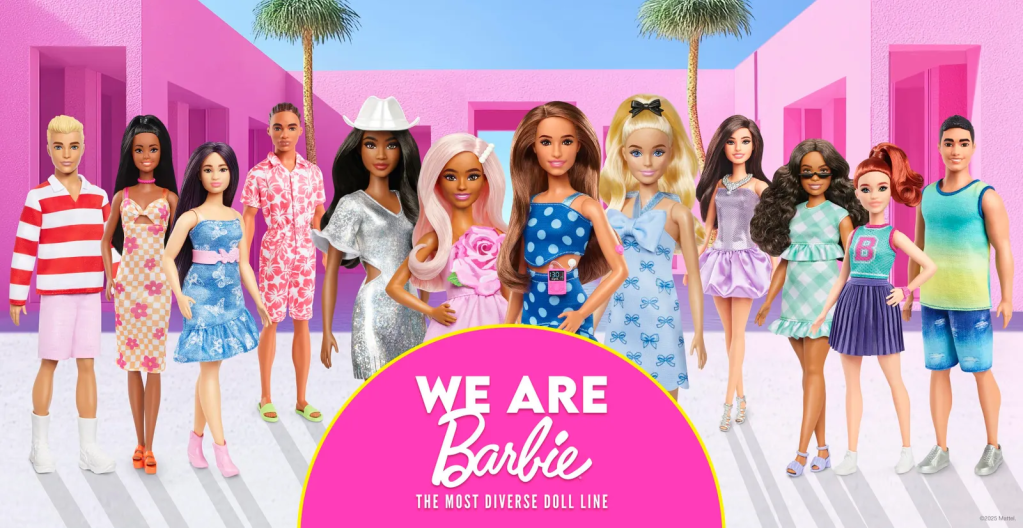
One of the pillars of the Barbie brand’s mission is to foster a greater sense of inclusion and empathy (Mattel, 2025). For the longest time, Barbies were just blonde with blue eyes, only relating to a small portion of their audience. Not being inclusive was something that Barbie struggled with for the longest time. Ensuring the company stays true to its pillars is essential and exactly what they are doing. The brand is creating a diverse doll line that aligns with its values. Although I am just speaking about the Type 1 diabetes doll, more dolls have Down syndrome and prosthetic legs. And even hearing aids. Reinforcing the brand’s larger message is crucial throughout public relations to ensure that the brand is perceived in a positive light.
What i would do differently
The brand did a great job of staying true to its mission statement. One thing I would have done differently is to feature various stories of kids living with type 1 diabetes throughout the campaign. Possibly having an animated version of the doll talking about what it is like having type 1 diabetes to educate children across the globe. Pop-up events featuring interactive or experimental exhibits where children can learn about diabetes would help blend education, awareness, and public relations by making it a friendly experience. Further down the road, I hope they create either different models of dolls with type 1 diabetes for all kids or a package where they can purchase accessories for dolls that resemble them. In all, expanding the education and diversity to a more global extent would help this campaign succeed even more.
Overall
The Barbie type 1 diabetes doll campaign successfully utilizes IMC marketing through the PESO model to bring visibility, credibility, and authenticity to the brand itself. Aligning this campaign with one of the pillars of their mission, being inclusivity and diversity, partnering with Breakthrough T1D reinforces Barbie’s positive brand perception. However, expanding educational opportunities, diversity efforts, and sharing stories of others will help strengthen campaigns like this in the future.
REferences
Barbie® introduces first-ever Barbie doll with type 1 diabetes to expand representation and inspire more children. Mattel, Inc. (n.d.). https://corporate.mattel.com/news/barbie-introduces-first-ever-barbie-doll-with-type-1-diabetes-to-expand-representation-and-inspire-more-children
Barbie with type 1 diabetes. Breakthrough T1D. (2025a, July 10). https://www.breakthrought1d.org/barbie/#:~:text=About%20Barbie%20with%20T1D,and%20at%20all%20major%20retailers.
Make your day. TikTok. (n.d.). https://www.tiktok.com/@thecordlefamily/video/7534441420132830477
NBC News. (2025, July 10). Mattel introduces first Barbie with type 1 diabetes. YouTube. https://youtu.be/kV0hGak5kI0

 Rylee Turner's Blog
Leave a comment